Course Description
Where does ethical harm actually happen?
Not in the abstract domains of philosophical theory, but in the charged, shadowed places where a minister's unexamined wounds quietly shape the care they offer — where power accumulates unnoticed until harm is done, and where the most difficult topics like money, sexuality, caste, and dual relationships exist.
This course deepens participants’ capacity to work with the personal, somatic, and cultural dimensions of shadow as they manifest in relationships that have inherent power differentials. Drawing on bioethics, depth psychology, eco-philosophy, and contemplative traditions, students will explore how to sense their own projections, navigate power edges with integrity, and act from authentic inner authority — even in the most charged relational encounters.
Through experiential methodologies uniquely suited to in-person immersion, the intensive moves beyond self-examination into direct relational practice. Students engage the ethics of money, sexuality, and dual roles. We will explore cultural shadow and the intersections of caste, equity, and access in entheogenic communities. We will enter into practices supporting relational repair as an essential skill. Shadow work can lead to a depth of understanding how power operates both in individual practitioners and in the broader field.
Students leave with practical tools for navigating the most difficult relational dynamics in their work, and a renewed commitment to the personal wholeness that authentic ethical ministry requires.
Learning Objectives
Upon successful completion of this course, students will be able to:
- Analyze the personal, somatic, and cultural dimensions of shadow and articulate how they manifest in ministerial relationships with inherent power differentials.
- Apply depth psychological frameworks to recognize and navigate projection, counter-transference, and shadow dynamics in sacred space holding.
- Evaluate ethical complexities arising from money, sexuality, and dual or overlapping roles in ministerial and facilitation relationships.
- Examine the intersections of caste, equity, and access in entheogenic communities and develop culturally responsive approaches to power dynamics.
- Practice relational repair and reconciliation skills as foundational practices of ministerial integrity.
- Integrate ethical power frameworks to assess and respond to power edges across a range of charged relational encounters.
- Synthesize contemplative, somatic, and depth psychological approaches to cultivate authentic inner authority in professional practice.
- Design personal practices for ongoing shadow integration in service of ethical ministerial presence.
Format
The core of this course is a four day in-person non-residential intensive in the San Francisco Bay Area. Lunch will be provided. Participants traveling for the intensive will be responsible for finding housing. There will be two live virtual meetings to support orientation and integration, one before and one after the in-person session.
Tuition
The 2-unit July intensive is $2000, with a $50 discount for payment in full.
Earn the full Relational Ethics Certificate (10 units: both intensives + both full-semester courses) for a bundled rate of $6000.
July 2027 Schedule
Preparation and Integration, Online, Wednesdays, July 14 and July 28, 1:30-3:30 PM PT/4:30-6:30 PM ET
In-person Intensive, Thursday, July 22—Sunday, July 25, 2027
Application
This course requires a brief application, with the exception of CSP ministers and students. Expect a response within two weeks of applying.
Meet Your Instructor
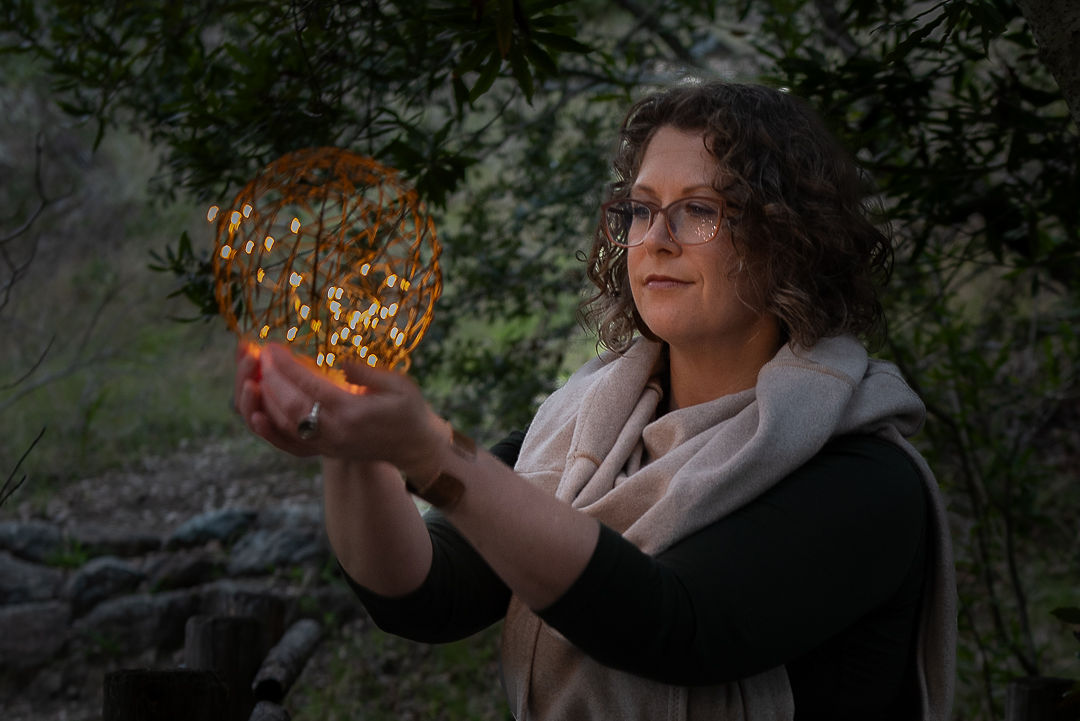
Andi Chatburn, DO, MA, HEC-C (they/she) is a Hospice and Palliative Care physician, bioethicist, and ordained ceremonialist. With over 25 years of experience facilitating spiritual ritual and ceremony, Dr. Chatburn accompanies people at the threshold of life's most profound transitions. An apprentice to death since childhood, Andi brings an intimate understanding of the relational nature of being human within an animate ecosystem of life. Through their own surrender to mystery, they know spiritual transformation affects entire ecosystems of relationships with both human and more than human relations.
Throughout a decade-long career at Providence Health and Services, Chatburn served as Senior Director for Ethics at Providence Health in Washington and Montana, where they chaired and led over a dozen ethics committees and taught ethics to interdisciplinary groups of healthcare professionals, spanning topics from pediatric ethics to end-of-life care. Their academic experience includes Clinical Instructor positions in Biomedical Ethics at Washington State University's Elson S. Floyd School of Medicine, Pacific Northwest University School of Osteopathic Medicine, and the University of Washington/Gonzaga School of Medicine. Andi also served as a spiritual director for fellow healthcare executives through Leadership Formation, and as a board member and instructor for Providence's Clinical Pastoral Education (CPE) Program for healthcare chaplains.
Dr. Chatburn completed a Doctor of Osteopathic Medicine and Master of Arts in Bioethics from Kansas City University (2010), holds a certificate in Spiritual Direction from the Companioning Center (2022), and holds a Master of Arts in Philosophy with an emphasis in Ecology, Spirituality, and Religion from California Institute for Integral Studies (2026). This unique combination brings unprecedented interdisciplinary depth to bioethics education and practice.
Based in the San Francisco Bay Area, Andi finds restoration through dancing, swimming in wild waters, and wandering in nature's fierce embrace.